
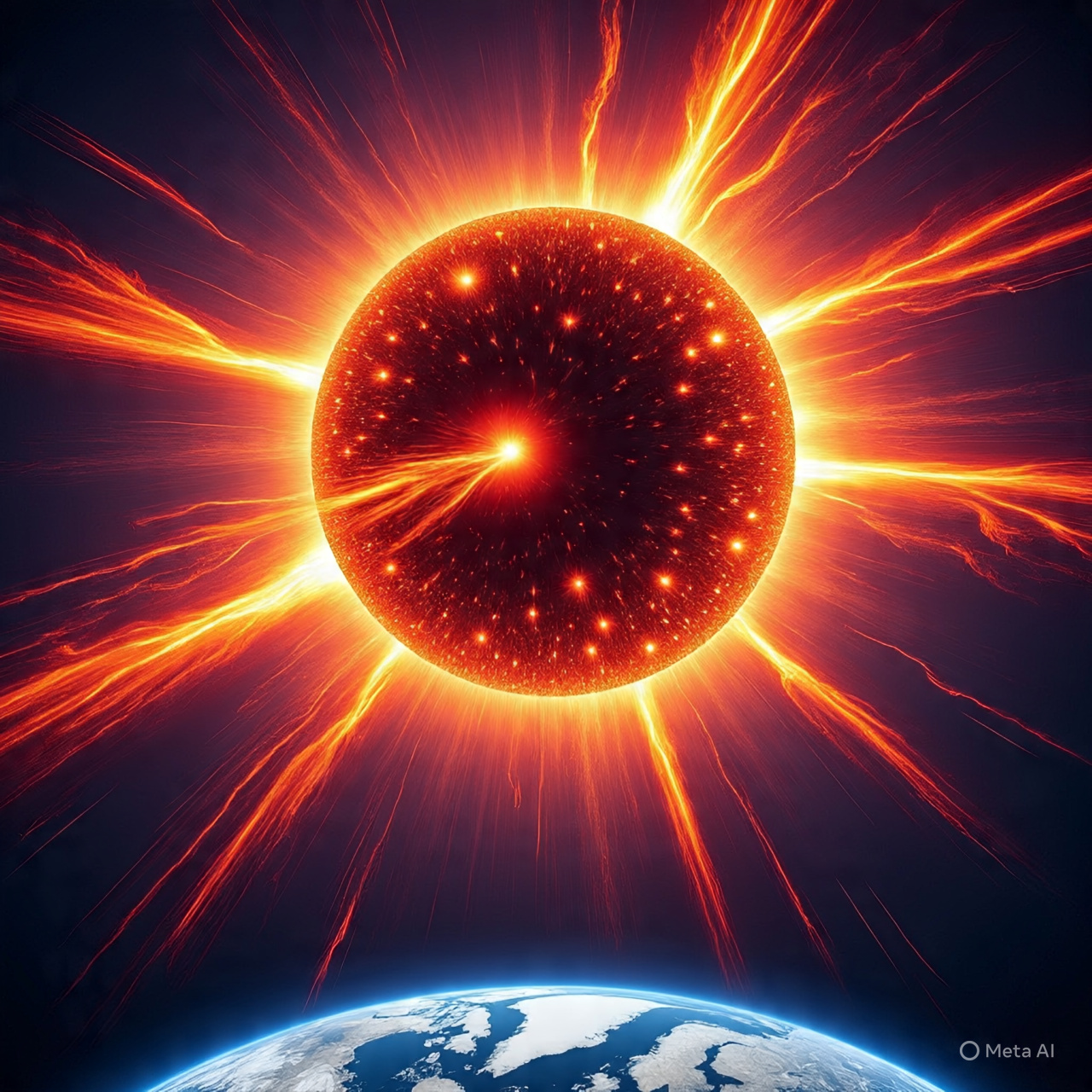
[Mon 8 – Tue 9 Dec 2025, Washington, D.C.] – A powerful coronal mass ejection (CME) linked to an M8.1 solar flare on Dec 6 has been tracked by NOAA’s Space Weather Prediction Center (SWPC) and is expected to slam into Earth’s magnetic field early‑midday Tuesday, Dec 9. The event follows a series of X‑ and M‑class flares that have kept the Sun unusually active this solar maximum phase.What’s Coming- CME arrival: Early‑midday Dec 9 (UTC).- Storm level: G3 (strong) geomagnetic storm, Kp ≈ 7.- Radio impact: R3‑level HF radio blackout on the sunlit side of Earth (Europe, Asia, Middle East) during the flare.Technology at Risk- Power grids: Induced geomagnetic currents (GICs) can stress transformers, especially in high‑latitude regions.- Satellites & GPS: Increased drag on low‑orbit satellites, possible signal jitter and loss of lock for GPS/ GNSS users.- Aviation & maritime HF: Shortwave radio fade‑outs affecting pilots and ships.- Communications: Potential disruptions to high‑frequency (HF) and some broadband services that rely on ionospheric propagation.Aurora Chasers’ DreamThe storm is forecast to push the aurora borealis far south of its usual latitudes. NOAA’s models show visible lights in 17 U.S. states, including:- Alaska, Washington, Oregon, Idaho, Montana, Wyoming- North Dakota, South Dakota, Minnesota, Iowa, Wisconsin- Michigan, Illinois, Indiana, Ohio, Pennsylvania, New YorkIf cloud cover cooperates, even parts of the Midwest (Nebraska, Illinois) and Northeast (Maine, Vermont, New Hampshire) may glimpse green‑purple curtains. Experts stress getting away from city lights, facing north, and allowing eyes to adjust for at least 30 minutes.Why It MattersSolar Cycle 25 is hitting a peak, meaning more X‑ and M‑class flares and CMEs than the previous quiet cycle. While the radiation spike from the Nov 11 X5.1 flare was brief and mostly at flight altitudes (≈10× normal), a G3 storm can stress infrastructure that wasn’t built for such events. NOAA and partner agencies (U.K. Met Office, NASA) are issuing alerts, urging power‑grid operators, airlines, and satellite services to prep contingency plans.Quick Tips for Sky‑Watchers- Best windows: Late evening Dec 8 → early morning Dec 9, then again Dec 9 night.- Apps: My Aurora Forecast, Space Weather Live for real‑time Kp index.- Photography: Wide‑angle lens, 10‑30 sec exposure, ISO 800‑1600, tripod stable.Sources: NOAA SWPC, U.K. Met Office, (link unavailable), Times Now (¹ ² ³ ⁴ ⁵)Stay tuned to official alerts for updates—this space weather could light up the night *and* test the resilience of modern tech. 🌌✨